
Columbus, Georgia in 1776: What Was Happening Before the City Existed?
Columbus, Georgia in 1776: What Was Happening Before the City Existed?
Exploring the Land, People, and History of the Chattahoochee Valley Before Columbus Was Founded
When Americans celebrate Independence Day each July 4th, most think about Philadelphia, the Declaration of Independence, and the birth of the United States.
But what was happening in the area we now call Columbus, Georgia, during that same remarkable year?
The answer surprises many people.
There was no Columbus.
There were no streets, homes, churches, schools, or businesses.
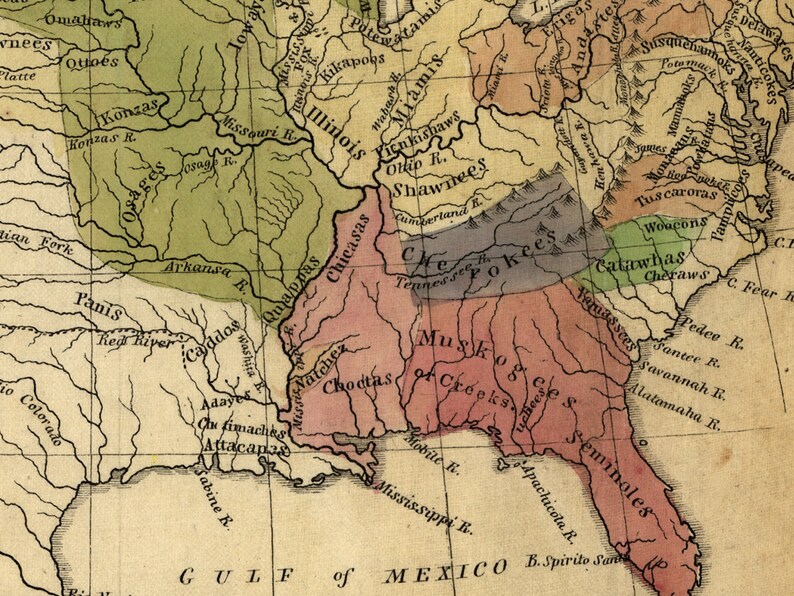
Instead, the land along the Chattahoochee River was home to one of North America's most sophisticated Native American civilizations—the Muscogee (Creek) Confederacy. The forests stretched for miles, wildlife was abundant, and the river served as one of the Southeast's great transportation corridors.
Today, it's difficult to imagine Columbus without its vibrant downtown, the RiverWalk, Fort Benning, and thousands of homes and businesses. Yet in 1776, this landscape looked almost entirely untouched by European settlement.
Let's step back nearly 250 years and explore what life was like in the Columbus area during America's founding year.

Columbus, Georgia in 1776 at a Glance
Quick Facts
- Columbus did not yet exist.
- The city would not be founded until 1828, 52 years later.
- The area was part of the homeland of the Muscogee (Creek) Confederacy.
- The Chattahoochee River was already one of the Southeast's most important travel routes.
- Western Georgia remained largely Native American territory.
- The American Revolution had just begun hundreds of miles away.
- There were no roads, bridges, railroads, or permanent European settlements in the immediate area.
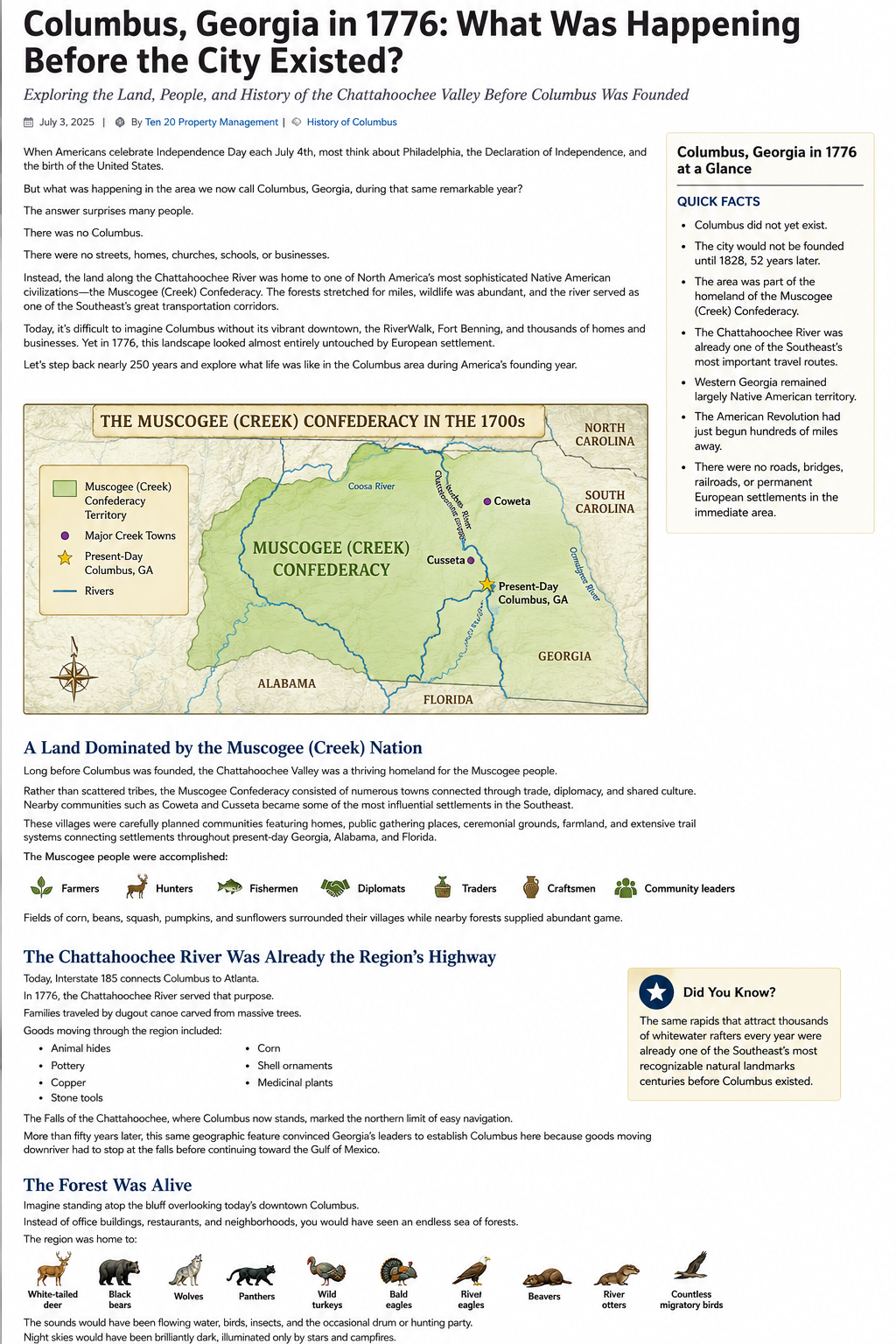
The Columbus, Georgia Area in 1776
Before Columbus existed, the Chattahoochee Valley was part of the Muscogee (Creek) homeland.
This original Ten 20 Property Management map illustrates the Columbus, Georgia area before the city existed, when the Chattahoochee Valley was part of the Muscogee (Creek) homeland.
A Land Dominated by the Muscogee (Creek) Nation
Long before Columbus was founded, the Chattahoochee Valley was a thriving homeland for the Muscogee people.
Rather than scattered tribes, the Muscogee Confederacy consisted of numerous towns connected through trade, diplomacy, and shared culture. Nearby communities such as Coweta and Cusseta became some of the most influential settlements in the Southeast.
These villages were carefully planned communities featuring homes, public gathering places, ceremonial grounds, farmland, and extensive trail systems connecting settlements throughout present-day Georgia, Alabama, and Florida.
The Muscogee people were accomplished:
- Farmers
- Hunters
- Fishermen
- Diplomats
- Traders
- Craftsmen
- Community leaders
Fields of corn, beans, squash, pumpkins, and sunflowers surrounded their villages while nearby forests supplied abundant game.
The Chattahoochee River Was Already the Region's Highway
Today, Interstate 185 connects Columbus to Atlanta.
In 1776, the Chattahoochee River served that purpose.
Families traveled by dugout canoe carved from massive trees.
Goods moving through the region included:
- Animal hides
- Pottery
- Copper
- Stone tools
- Corn
- Shell ornaments
- Medicinal plants
The Falls of the Chattahoochee, where Columbus now stands, marked the northern limit of easy navigation.
More than fifty years later, this same geographic feature convinced Georgia's leaders to establish Columbus here because goods moving downriver had to stop at the falls before continuing toward the Gulf of Mexico.
The Forest Was Alive
Imagine standing atop the bluff overlooking today's downtown Columbus.
Instead of office buildings, restaurants, and neighborhoods, you would have seen an endless sea of forests.
The region was home to:
- White-tailed deer
- Black bears
- Wolves
- Panthers
- Wild turkeys
- Bald eagles
- Beavers
- River otters
- Countless migratory birds
The sounds would have been flowing water, birds, insects, and the occasional drum or hunting party.
Night skies would have been brilliantly dark, illuminated only by stars and campfires.
While America Declared Independence...
During July 1776, leaders in Philadelphia approved the Declaration of Independence.
Although these events would eventually reshape the continent, life in the Chattahoochee Valley continued much as it had for generations.
Most Muscogee communities focused on protecting their people, maintaining trade relationships, and preserving their independence rather than participating directly in the conflict between Britain and the American colonies.
Georgia's Frontier Ended Far Away
Many people assume settlers already lived throughout Georgia in 1776.
Actually, they did not.
Most European settlement remained concentrated around Savannah, Augusta, and portions of eastern Georgia.
The Columbus area remained firmly within Muscogee territory.
Traveling into the region often required Native American guides, diplomacy, and established trade relationships.
Trade Connected the Region to the World
Although remote by today's standards, the Columbus area was hardly isolated.
Trade routes linked Muscogee communities to British merchants and other Native nations across the Southeast.
Each year, thousands of deerskins traveled east in exchange for:
- Iron tools
- Muskets
- Ammunition
- Blankets
- Cooking utensils
- Cloth
- Metal cookware
These exchanges connected the Chattahoochee Valley to an international economy decades before Columbus was founded.
The Next Fifty Years Changed Everything
The American Revolution eventually ended.
Then came westward expansion.
As settlers moved farther into Georgia, pressure mounted for Native lands.
A series of treaties gradually transferred millions of acres from the Muscogee people to the State of Georgia.
In 1825, the controversial Treaty of Indian Springs accelerated this process.
Only three years later, in 1828, Georgia officially founded the City of Columbus.
Within a single generation, one of North America's oldest Native American homelands became a bustling frontier city powered by the Chattahoochee River.
What Can You Still Experience Today?
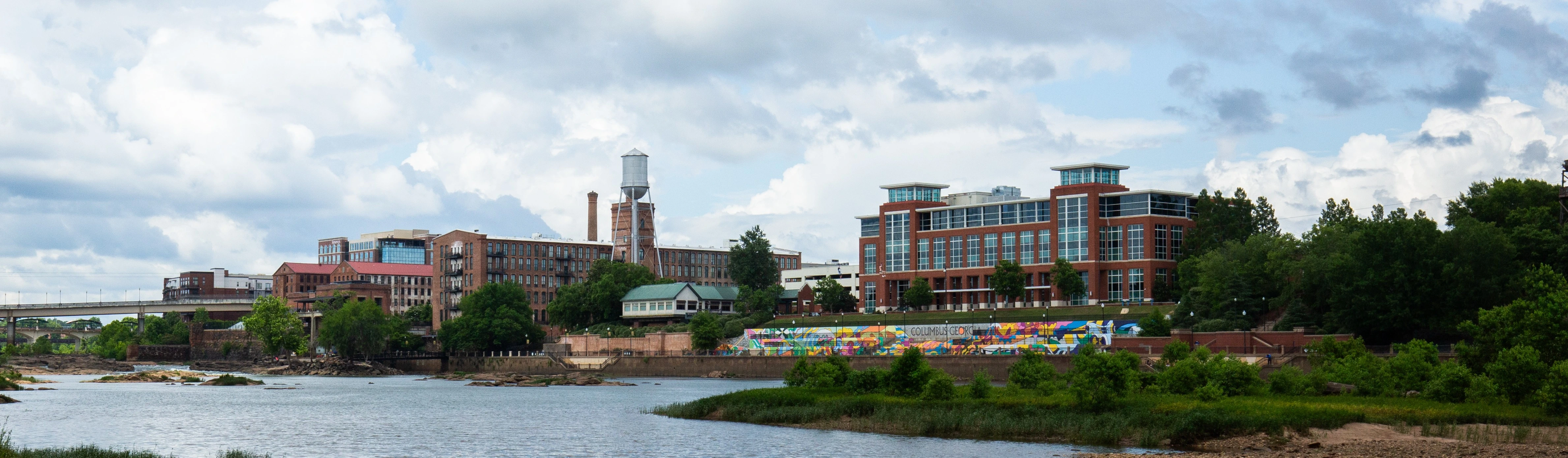
Although Columbus has grown into a modern city, many features of the 1776 landscape remain remarkably recognizable.
Visitors can still experience:
- The Chattahoochee RiverWalk, following the same river corridor traveled by Native Americans for centuries.
- The Chattahoochee River itself, still flowing over the same rock formations that shaped the region's history.
- Oxbow Meadows Environmental Learning Center, where visitors can explore ecosystems similar to those found in the 1700s.
- The dramatic Fall Line, where the hard rocks of the Piedmont meet the softer Coastal Plain—a natural feature that determined why Columbus was founded where it is.
Standing along the river today offers one of the closest connections to what someone in 1776 would have recognized.
Imagine Standing Here in 1776
Close your eyes and imagine standing where downtown Columbus now sits.
No bridges.
No skyline.
No traffic.
Only towering forests, the roar of the Chattahoochee Falls, birds overhead, and canoes quietly navigating one of the Southeast's great rivers.
It was a world both familiar and completely different.
Why This History Still Matters
Understanding Columbus's history helps us appreciate how extraordinary this community has become.
From Native American homeland to frontier settlement...
From river trading post to textile manufacturing center...
From military community to one of Georgia's most dynamic cities...
The Columbus area has continually evolved while remaining shaped by the Chattahoochee River.
At Ten 20 Property Management, we believe that understanding a community's past provides valuable perspective on its future. Whether you're relocating to the area, investing in rental property, or simply enjoying local history, Columbus offers a story unlike almost anywhere else in the Southeast.
Historical Timeline
| Year | Event |
|---|---|
| Before 1500 | Indigenous peoples thrive throughout the Chattahoochee Valley for centuries. |
| 1540 | Spanish explorer Hernando de Soto's expedition passes through parts of the Southeast, bringing the first documented European contact to many Native communities. |
| 1776 | Present-day Columbus remains part of the Muscogee (Creek) homeland as the American Revolution begins. |
| 1783 | The American Revolution ends, and westward settlement begins accelerating. |
| 1825 | The Treaty of Indian Springs cedes much of the remaining Creek land in Georgia. |
| 1828 | The City of Columbus is officially founded along the Chattahoochee River. |
Looking Ahead
This article is part of our ongoing exploration of the rich history of the Columbus region. In future articles, we'll explore:
- Columbus, Georgia in 1800
- The Founding of Columbus in 1828
- How the Chattahoochee River Built Columbus
- Columbus During the Civil War
- How Fort Benning Helped Shape Modern Columbus
- The Evolution of Columbus into One of Georgia's Best Places to Live
Whether you're a lifelong resident, a newcomer, or considering investing in the Columbus area, understanding our history provides a deeper appreciation for everything this remarkable community has to offer.
Ultimate guide to living in Columbus Georgia
Columbus Ga Property Manager provides full-service property management and rental home services throughout Columbus, Fort Benning, Midland, Harris County, Phenix City, Fort Mitchell, and the surrounding Chattahoochee Valley area.