

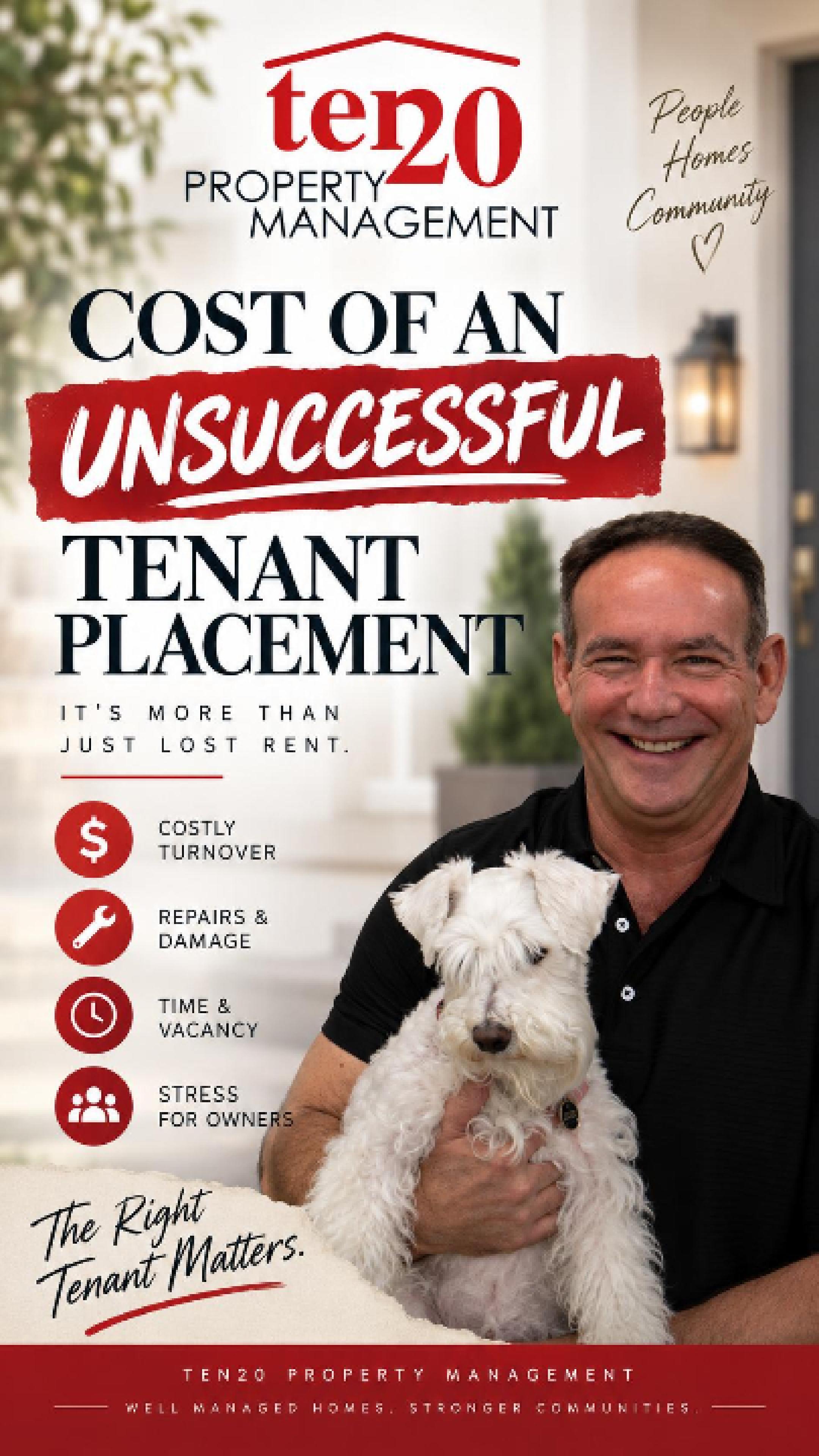
The Real Cost of an Unsuccessful Tenant Placement
When a rental home becomes vacant, most property owners naturally want it rented as quickly as possible. Every vacant day represents lost income, so accepting the first applicant who appears qualified can be tempting.
However, placing a tenant quickly is not the same as placing the right tenant.
An unsuccessful tenant placement can cost a rental property owner far more than a few missed rent payments. It can lead to property damage, additional repairs, legal expenses, another vacancy, repeated turnover costs, and months of unnecessary stress.
That is why effective tenant screening is not simply a step in the leasing process. It is one of the most important forms of risk management available to a rental property owner.
The Cost Is More Than Lost Rent
When people think about an unsuccessful tenant placement, unpaid rent is usually the first concern—and it is certainly an important one. But unpaid rent may be only one part of the total financial loss.
The true cost can include:
- Missed or late rent
- Damage beyond normal wear and tear
- Cleaning and repair expenses
- Lease-enforcement and legal costs
- Additional advertising and leasing expenses
- Utility and lawn-care costs during vacancy
- Lost income while the property is being prepared again
- Time spent managing problems and coordinating repairs
- Stress and disruption for the property owner
Even when a security deposit is available, it may not cover the full amount of unpaid rent, repairs, cleaning, and other expenses.
A placement that initially appeared to save a few weeks of vacancy can ultimately cost thousands of dollars and create months of additional work.
Turnover Is Expensive
Every time a tenant moves out, the rental property must be evaluated and prepared for the next resident.
Depending on the home’s condition, turnover may involve:
- Interior painting and touch-ups
- Carpet cleaning or replacement
- General cleaning
- Appliance repairs
- Landscaping and exterior cleanup
- Rekeying or changing locks
- Maintenance inspections
- Advertising and showing the property
- Processing new applications
- Completing a new lease and move-in inspection
Some turnover is unavoidable. People receive military orders, purchase homes, relocate for work, or experience other major life changes.
The goal is not to eliminate every turnover. The goal is to avoid preventable turnover caused by an unsuitable placement, poor communication, or an applicant being approved without adequate screening.
Property Damage Can Multiply the Loss
Normal wear and tear is part of owning a rental property. Significant damage is different.
An unsuccessful placement may result in damage that goes unnoticed until it becomes more expensive. A small plumbing leak that is not reported can create flooring or drywall damage. Unauthorized occupants or pets can increase wear on the property. Neglected lawn care, excessive trash, or unreported maintenance problems can quickly affect a home’s condition.
This is why tenant screening should be supported by good property management after the tenant moves in.
Clear communication, detailed move-in documentation, reliable maintenance reporting, and regular property inspections all help protect the owner’s investment. At Ten 20 Property Management, our inspection process includes detailed photographs and 360-degree documentation so owners can better understand the condition of their homes.
Another Vacancy Means Another Loss of Income
If a placement does not work out, the owner often returns to the same position they were trying to avoid—a vacant property.
The difference is that the home may now require cleaning, repairs, administrative work, or legal action before it can be marketed again. The owner may experience both the original loss and the cost of starting the leasing process over.
Unpaid rent + repairs + turnover expenses + vacancy loss + leasing costs = the real cost of an unsuccessful placement.
This is why approving an applicant solely because the property has been vacant for a few weeks can be a costly decision.
It may be better to accept a few additional days of vacancy than to lower reasonable screening standards and create a much larger problem later.
What Should Tenant Screening Include?
No screening process can eliminate every risk. People’s circumstances can change, and even a well-qualified resident may eventually experience financial or personal difficulties.
However, a consistent and well-documented screening process can substantially reduce avoidable risk.
Depending on applicable laws and the property’s written rental criteria, the process may include reviewing:
- Identity verification
- Income and employment information
- Rental history
- Credit history
- Relevant background information
- Prior landlord references
- Occupancy requirements
- Pet information
- The applicant’s ability to meet the lease obligations
The same written standards should be applied consistently to every applicant. This helps property owners make decisions based on objective information while complying with fair-housing requirements and other applicable laws.
The goal is not to find a “perfect” tenant. The goal is to make a careful, informed, and legally compliant decision using the best information reasonably available.
The Highest-Income Applicant Is Not Automatically the Best Placement
Income is important, but it is only one part of the overall picture.
A successful tenant placement generally involves someone who:
- Has the demonstrated ability to pay the rent
- Meets the established rental criteria
- Has a history that supports the application
- Understands the lease requirements
- Communicates when maintenance problems arise
- Treats the property responsibly
- Is likely to remain for a reasonable period
Tenant placement is not simply about filling a home. It is about establishing a tenancy that has a reasonable opportunity to work well for both the resident and the property owner.
We have the tools to help us make good decisions at Ten 20. We combine our tools with our expeience!
Good Tenant Relationships Matter After Move-In
The screening process ends when an applicant is approved, but successful property management does not.
Residents are more likely to communicate and remain in a property when maintenance requests receive attention, expectations are clear, and they are treated professionally. Good tenants should feel that they are renting a home—not that they are merely a source of monthly income.
This does not mean ignoring lease violations or avoiding difficult conversations. It means managing the relationship consistently, fairly, and respectfully.
At Ten 20, we believe the right tenant matters—but so does the way that tenant is treated throughout the lease.
Fast Placement and Careful Screening Can Work Together
Property owners should not have to choose between marketing a home effectively and screening applicants carefully.
Strong photography, accurate pricing, broad online exposure, prompt responses to inquiries, organized showings, and efficient application processing can help reduce vacancy without sacrificing screening standards.
The goal is not to slow down the leasing process. The goal is to make it efficient without becoming careless.
A professional leasing process should help an owner:
- Determine an appropriate market rent
- Present the property effectively
- Respond quickly to qualified prospects
- Apply consistent screening criteria
- Document the property’s condition
- Prepare a clear and legally compliant lease
- Establish expectations before move-in
That combination gives the tenancy a stronger beginning.
The Right Tenant Matters
An unsuccessful tenant placement can affect far more than one month of rental income. It can affect the condition of the home, the owner’s cash flow, the property’s long-term performance, and the owner’s peace of mind.
Careful tenant selection does not guarantee that every tenancy will be problem-free. It does, however, give rental property owners a better opportunity to avoid preventable losses.
At Ten 20 Property Management, we help rental owners throughout Columbus, Fort Benning, Harris County, Midland, Fortson, Phenix City, Fort Mitchell, Smiths Station, and Opelika market their homes, evaluate applications, document property condition, coordinate maintenance, and manage the tenant relationship throughout the lease.
We also believe property owners deserve to understand what professional management costs and what they receive in return. You can review our services and transparent fee structure on our property management pricing page.
Because filling a vacancy is only the beginning.
The right tenant matters.
Watch: The Real Cost of Placing the Wrong Tenant
If you own a rental property in the Columbus–Fort Benning region and would like help protecting your investment, contact Ten 20 Property Management to discuss your property and management needs.